


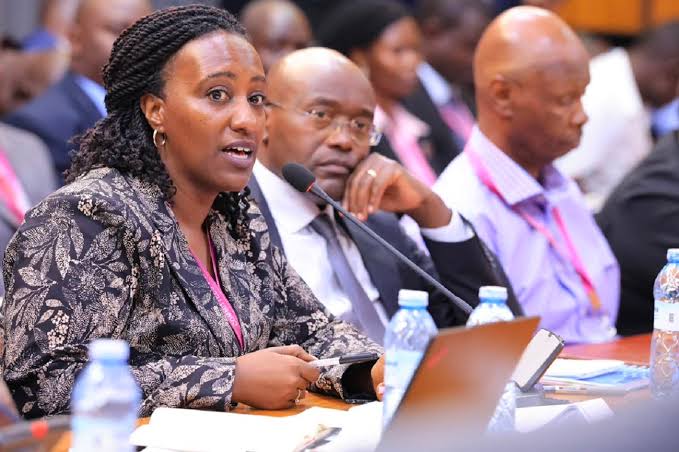
Members of Parliament have demanded the removal of former UMEME employees from the Uganda Electricity Distribution Company Limited (UEDCL), accusing the electricity distributor of failing to address persistent power outages that continue to frustrate households, businesses and industries across the country. The lawmakers made the demand during a heated meeting of Parliament’s Natural Resources Committee, where electricity sector officials faced tough questions over unreliable power supplies, delayed investments and the slow improvement of the national distribution network.
The legislators questioned why Ugandans continue to experience prolonged blackouts months after the government took over electricity distribution from UMEME in April 2025. More than 60 per cent of UEDCL’s workforce reportedly consists of former UMEME employees who transitioned to the state-owned company following the end of UMEME’s 20-year concession. The company’s Acting Managing Director, Eng. Joselynne Rwabwogo Rwakakoko, is also among the former UMEME staff. Some MPs argued that the government should reconsider retaining the former employees if the new arrangement is failing to deliver the expected improvements, although no evidence was presented to prove that they were deliberately sabotaging UEDCL.
The lawmakers were further angered by revelations concerning funds reportedly available to improve electricity distribution infrastructure. Dr. Geoffrey Okoboi, the Director of Economic Regulation at the Electricity Regulatory Authority (ERA), reportedly informed the committee that $126 million had been made available by the government, alongside a government-guaranteed $50 million loan from ABSA Bank. However, MPs were shocked to learn that UEDCL had reportedly utilised only about $1.5 million, prompting questions about why substantial financial resources had not translated into better electricity services for consumers.
UEDCL management reportedly explained that its spending had been affected by challenges in sourcing equipment from local suppliers under the Buy Uganda, Build Uganda policy. According to the company, some local businesses lack the capacity to deliver essential materials, including transformers, within the required timelines and quality standards. However, the explanation did little to convince frustrated lawmakers, who questioned why the company had failed to find practical solutions while Ugandans continued to endure blackouts that disrupt businesses, affect productivity and interfere with daily activities.
The committee also turned its attention to ERA, questioning whether regulatory decisions made before UMEME’s exit contributed to the current challenges. Committee Chairperson Dan Kimosho challenged Okoboi to explain why UEDCL had allegedly been restricted from making investments in the distribution network before April 2025, when UMEME was still responsible for the sector. Okoboi reportedly argued that regulatory arrangements limited UEDCL’s ability to invest while the concession remained in force. However, MPs questioned why preparations had not been made earlier to ensure a smooth transition and prevent consumers from suffering under the new arrangement.
Lawmakers also blamed the electricity crisis on ageing infrastructure, overloaded transformers, poorly maintained substations and the rapid growth in the number of electricity customers. Figures presented during the meeting reportedly showed that Uganda’s customer base increased from approximately 1.6 million in 2021 to 2.78 million in 2026, placing additional pressure on a distribution network that MPs believe has not received sufficient investment. Vandalism of electricity equipment was also identified as a contributing factor, with officials expected to address the various challenges affecting the reliability of power supplies.
Several MPs shared accounts of the hardships caused by prolonged outages in their constituencies. Allan Atugonza, the MP for Buliisa County, complained that residents and business owners in Biso Town Council sometimes spend several days without electricity. Kimosho also reported persistent interruptions in his Kazo area, while Busiro North MP Moses Mayanja raised concerns about unreliable electricity access in parts of Wakiso District. The lawmakers argued that consumers should not continue paying for electricity services while enduring repeated disruptions that threaten businesses, damage economic opportunities and make it difficult for communities to plan their daily activities.
Mayanja and other legislators consequently called for a major shake-up at UEDCL, insisting that the government must establish whether retaining former UMEME employees is helping or undermining the new electricity distribution system. They argued that the continued blackouts require urgent action, accountability and a clear plan to improve service delivery. However, the allegations of sabotage against former UMEME employees remain unproven, and the committee meeting did not establish that they were responsible for the outages. The growing public frustration now puts pressure on UEDCL and ERA to explain the slow use of available funds, repair ageing infrastructure and demonstrate that the government takeover can deliver the reliable electricity Ugandans were promised.