

Uganda’s political landscape could be heading for an intriguing twist after the Uganda Youth Umbrella endorsed retired General Salim Saleh for the presidency in the 2031–2036 term, positioning him as a potential contender in the country’s future leadership debate. The move introduces a fresh dimension to discussions about who could lead Uganda after the 2026–2031 political cycle, with attention likely to turn to other influential figures, including Gen. Muhoozi Kainerugaba.
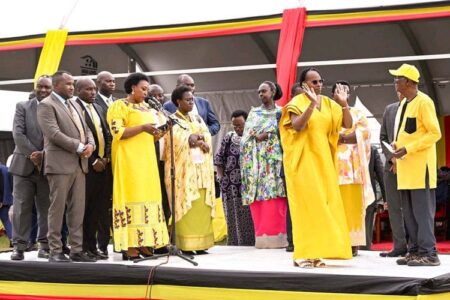
The endorsement was announced during the official launch of the Uganda Youth Umbrella, where the organisation unveiled its intention to mobilise young people from different parts of the country behind Saleh’s proposed presidential bid. The group said its campaign would focus on promoting what it described as his vision for Uganda’s future, extending beyond the 2026 elections and looking towards the 2031 presidential race.
Explaining its decision, the organisation pointed to Saleh’s military background, contribution to Uganda’s liberation struggle and extensive involvement in the country’s political and economic affairs. According to the group, his years of experience make him a suitable figure to lead the country through its next phase of development and address challenges affecting different sections of the population.
The youth organisation also highlighted Saleh’s association with Operation Wealth Creation, an initiative aimed at improving household incomes through wealth creation and economic empowerment. It argued that programmes promoting agriculture, agribusiness, innovation and small-scale manufacturing could provide young Ugandans with opportunities to become economically independent rather than relying solely on formal employment.
Beyond economic empowerment, the Uganda Youth Umbrella presented Saleh as a figure capable of bringing together people across generational, social and regional divides. The organisation maintained that his experience and established connections within Uganda’s political and economic structures could help promote national unity and encourage cooperation among communities with different interests.
The group further argued that its endorsement was motivated by concerns about the everyday struggles facing young Ugandans, particularly unemployment, limited access to income-generating opportunities and the difficulties of establishing sustainable businesses. It called on students, farmers, boda boda riders, entrepreneurs and other youth groups to join its proposed nationwide mobilisation drive in support of Saleh’s political ambitions.
Operating under the slogan, “Building Uganda’s Future, For the People, For the Nation,” the organisation said it intended to rally support for Saleh ahead of the 2031 elections. However, the endorsement represents the group’s political position and does not, by itself, establish that Saleh has formally declared his candidacy or that he intends to seek the presidency.
The development could nevertheless inject fresh energy into Uganda’s succession debate, particularly as political observers continue to speculate about the ambitions of influential figures who could feature in the country’s future leadership contest. By placing Saleh’s name in the 2031 presidential conversation, the Uganda Youth Umbrella has introduced another potential dimension to the debate surrounding Gen. Muhoozi Kainerugaba and other figures who may emerge as contenders for Uganda’s highest office.