



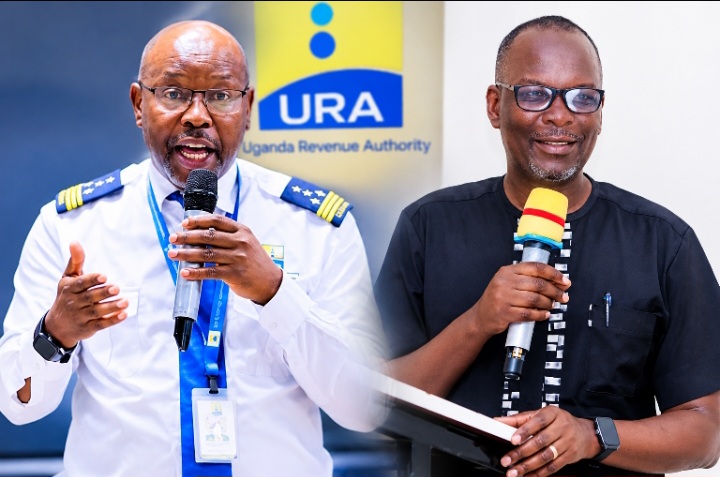
A major shake-up has taken place at the Uganda Revenue Authority (URA) after two high-ranking officials were shown the exit following disciplinary proceedings over alleged financial impropriety, irregular customs operations and mishandling of investigations. The affected officers are former Customs Commissioner Asadu Kisitu Kigozi and former Assistant Commissioner for Integrity, Compliance and Ethics James Abola. Information contained in the dismissal documents paints a troubling picture of the challenges that emerged within departments expected to enforce tax laws and protect public revenue.
Perhaps the most eye-catching revelation concerns the handling of a Rolls-Royce Cullinan whose reported value stands at approximately Shs3.4 billion. Kigozi was accused of using his position to influence the vehicle’s clearance despite alleged failures to comply with the established customs requirements. The disciplinary documents indicate that proper valuation procedures were not followed and the necessary taxes were not appropriately paid before the vehicle was cleared.
Beyond the expensive vehicle, the former customs chief faced allegations involving private financial dealings and the handling of taxpayers’ obligations. One of the cases concerned Master Grain Volunteer Limited, whose actual tax liability and compliance information were allegedly concealed in 2025, reportedly exposing the government to significant revenue losses. The accusations also included an alleged demand for Shs300 million from clearing agent Timothy Segane, followed by a separate Shs5 million payment reportedly channelled through another person in 2026.
Questions were equally raised about whether some traders benefited from questionable tax arrangements that placed competing businesses at a disadvantage. Disciplinary records cited the case of businessman James Matovu Galunsanja, who reportedly cleared a tax bill of Shs19 million using documents described as misleading. Other taxpayers dealing in comparable products were said to have paid over Shs90 million. The alleged differences in assessments raised concerns about the fairness of the tax system and whether certain individuals were receiving favourable treatment.
The disciplinary case against Kigozi also covered other decisions made during his time in office, including the approval of a re-export transaction on March 18, 2026. After considering the accusations, URA found him guilty of several disciplinary offences, among them corruption, fraud, dishonesty, gross negligence, unsatisfactory performance and aiding and abetting offences. His dismissal was confirmed following a Board meeting on November 4, under the authority’s 2025 Disciplinary and Grievance Management Guidelines.
For Abola, the controversy centred on his responsibilities in dealing with suspected fraud involving Pre-Registration Numbers (PRNs). He had reportedly been tasked in 2024 with investigating allegations involving Godfrey Omony and Marvin Kayima. However, the disciplinary proceedings accused him of failing to handle the investigation adequately to enable the matter to proceed towards prosecution. His role in subsequent developments also became a subject of concern.
Abola was further accused of altering conclusions in an investigation report in 2026, although he reportedly had not been appointed to the team responsible for conducting the fresh investigation. The authority subsequently found him guilty of unsatisfactory performance, aiding and abetting offences and gross negligence. His removal means that two officials who previously held key positions in customs administration and internal integrity oversight have now left the institution following disciplinary action.
The cases have drawn attention to the importance of accountability in an institution whose responsibilities directly affect government revenue and the country’s economic management. The allegations involving the luxury vehicle, the reported millions in bribes and disputed tax assessments have highlighted the need for strict supervision of customs decisions and internal investigations. URA’s action against the two former officials comes amid continued efforts to strengthen institutional discipline, close revenue loopholes and ensure that every taxpayer operates under the same rules.