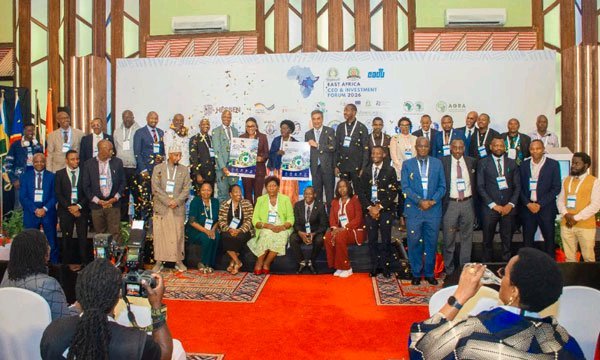
East African governments and businesses have launched a new regional platform to coordinate efforts on waste management, recycling and resource-efficient industries as the volume of waste generated across the region continues to rise.
Rebecca Alitwala Kadaga, Uganda’s First Deputy Prime Minister and Minister for East African Community Affairs, launched the Circular Economy Platform during the East Africa CEO & Investment Forum 2026 in Nairobi, Kenya. Kadaga, who chairs the East African Community Council of Ministers, said the initiative will bring different stakeholders together to strengthen cooperation on circular economy activities.
The launch comes as East Africa faces a growing waste-management challenge. According to a presentation by Gift Gabriel Mbuya of the East African Business Council, waste generated in the region increased from about 90 million tonnes in 2010 to 180 million tonnes in 2023, effectively doubling over the period.
The presentation further indicated that only about 10 percent of the waste is recycled, while between 40 and 60 percent remains uncollected. The figures have highlighted the need for stronger waste collection and recycling systems while also pointing to opportunities for businesses and investors in waste recovery and other resource-efficient industries.
The new platform will connect governments, private companies, investors, civil society organisations, universities and other stakeholders to develop common approaches to circular economy policies and Extended Producer Responsibility (EPR) programmes. EPR generally requires producers and other businesses to take greater responsibility for products and packaging after they reach consumers.
The platform will focus on harmonising policies, sharing knowledge, providing technical support and coordinating circular economy initiatives across EAC member states. It will also bring together producers, importers, brand owners, retailers, waste-management companies and informal-sector workers alongside government agencies and regulators.
According to the East African Business Council, the initiative will operate through four key areas covering policy dialogue, knowledge management, technical advisory services and coordination. It will also provide information on EPR frameworks, successful practices, legal requirements and possible financing opportunities for circular economy projects.
EABC Vice Chairperson Simon Kaheru said the private sector was prepared to move beyond discussions and support practical solutions. The platform is expected to strengthen public-private cooperation while creating opportunities for investment, innovation, employment and more sustainable businesses as East African countries seek to turn the region’s growing waste challenge into economic opportunities.