




Chief Justice Dr Flavian Zeija has called on law schools in Uganda to strengthen practical training, embrace digital court technology and instil professional ethics in students to improve justice delivery and protect the country’s democratic institutions.
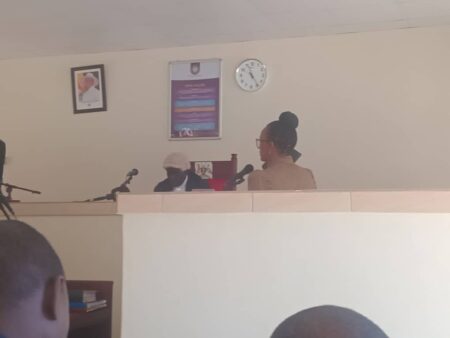
Zeija made the call in a keynote address delivered on his behalf by Entebbe Resident Judge, Lady Justice Flavia Nabakooza Kalungi, during the 21st Nkumba University Law Day held on October 15, 2026.
The event was held under the theme, “Legal Education as a Catalyst for Strengthening Justice and Democratic Institutions in Uganda,” bringing attention to the role universities play in preparing future legal professionals for the demands of modern justice systems.
In his address, the Chief Justice emphasised that legal education should go beyond preparing graduates for employment. He said universities must equip students with the knowledge, practical abilities and moral values required to uphold the Constitution, protect democracy and strengthen public confidence in the courts.
He urged law schools to give greater attention to alternative dispute resolution, arguing that modern legal practice requires professionals who can resolve conflicts, restore relationships and support rehabilitation instead of relying entirely on courtroom battles.
The Chief Justice identified mediation, conciliation, arbitration and plea bargaining as important areas that should be incorporated more deeply into legal training. He noted that practical exposure would help students understand how disputes can be resolved efficiently while promoting access to justice.
Lady Justice Nabakooza illustrated the importance of experiential learning by recounting a sensitisation visit she led to Kigo Prison, including its women’s facilities, on August 28, 2026. The visit brought together Entebbe High Court staff, advocates handling State Briefs and other criminal justice stakeholders.
Nkumba University law lecturer Counsel Peruth Nshemerirwe accompanied students during the visit, where they observed justice-sector practitioners educating inmates about plea bargaining and rehabilitation. The experience offered students an opportunity to connect classroom knowledge with the realities of the criminal justice system.
Justice Nabakooza encouraged law students to attend court proceedings regularly to learn courtroom etiquette, observe how advocates present cases and understand how legal principles are applied in actual disputes.
She also highlighted the establishment of the Entebbe High Court Circuit as part of the Judiciary’s efforts to bring judicial services closer to the public. The initiative, she noted, helps reduce the financial and logistical challenges citizens may face when seeking justice.
However, she stressed that expanding access to courts must go hand in hand with producing competent and ethical professionals, including judges, magistrates, state attorneys and defence lawyers.
Students were encouraged to take advantage of learning opportunities at courts within their home communities, as well as the Entebbe and Kajjansi Chief Magistrates’ Courts. Justice Nabakooza also expressed willingness to support university moot court competitions through judicial officers, provided the Judiciary receives requests in advance.
On digital transformation, Chief Justice Zeija urged law schools to prepare students for the growing use of technology in court administration. He specifically highlighted the Electronic Court Case Management Information System (ECCMIS), which supports electronic filing, payment of court fees, case allocation and tracking of judgments.
He recommended that Nkumba University’s School of Law work with the Judiciary’s information and communications technology experts to train students in using the system, particularly those approaching graduation. Such preparation, he said, would help students become familiar with digital court processes before proceeding to the Law Development Centre or entering legal practice.
Beyond technical knowledge, Zeija stressed that integrity must remain central to legal education and professional practice. He challenged students to recognise that the strength of justice institutions depends not only on the laws they enforce but also on the character of the people entrusted with enforcing them.
Drawing inspiration from Nkumba University’s motto, “I Owe You,” he urged students to embrace service, accountability and loyalty to the Constitution.
“Your degree will get you into the courtroom, but your character will keep you there,” he said.
The Chief Justice reiterated the Judiciary’s zero-tolerance stance on corruption, encouraging students to cultivate honesty and professional responsibility while still at university rather than waiting until they begin practising law.
He also commended Nkumba University’s leadership and faculty for their contribution to legal education and community outreach, calling for stronger cooperation between universities, the Bench and the Bar.
Zeija said sustained partnerships between academic institutions and justice-sector stakeholders would help produce legal professionals capable of responding to emerging challenges, embracing technological change and advancing access to justice.
His message placed practical experience, digital competence and ethical conduct at the centre of efforts to prepare Uganda’s next generation of legal professionals and strengthen the institutions responsible for upholding the rule of law.