



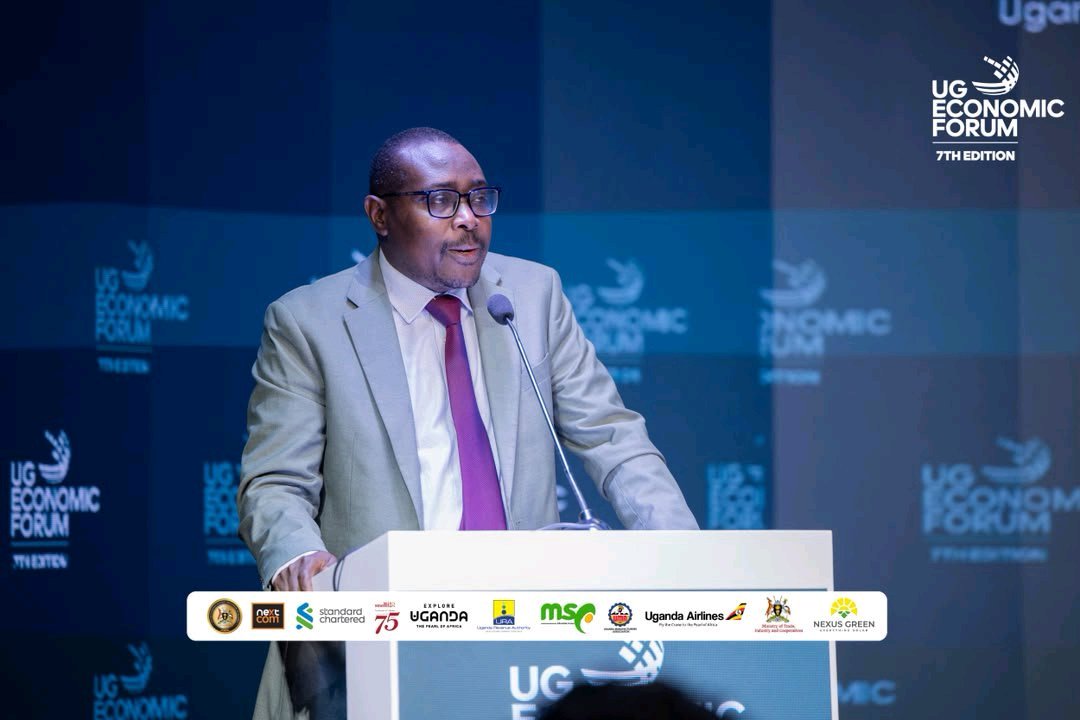
The Uganda Revenue Authority (URA) has moved to clarify concerns surrounding the integration of Tax Identification Numbers (TINs) with National Identification Numbers (NINs), maintaining that the process will not automatically subject every Ugandan to taxation. The explanation was delivered by URA Commissioner for Domestic Taxes Dennis Kugonza Kateeba as the seventh Uganda Economic Forum concluded its four-day programme focused on improving incomes, supporting businesses and expanding economic opportunities.
Kateeba said the linkage is intended to modernise tax administration and make access to government services more convenient. By allowing government agencies to exchange relevant information, the initiative is expected to reduce repeated requests for physical identification documents and improve coordination between public institutions. He explained that the arrangement would help streamline administrative procedures while making service delivery more efficient.
The URA official further explained that tax obligations are determined by an individual’s economic activities and the requirements of the law, rather than simply having a national identification number connected to the tax authority. He stressed that the linkage should not be misunderstood as an automatic declaration that every person must pay taxes, addressing concerns that have emerged over the relationship between national identification and taxation.
Kateeba also used the forum to encourage businesses to adopt the Electronic Fiscal Receipting and Invoicing Solution (EFRIS), pointing to its potential to strengthen financial accountability and improve compliance. He said businesses that maintain accurate records can better understand their financial position, manage expenses and present credible information when seeking loans. Improved record-keeping, he added, can support business growth while making financial management more effective.
Attention also turned to Uganda’s creative industry, where experts highlighted the financial challenges faced by artists who lack adequate knowledge of intellectual property protection. Kenneth Muhangi, a partner at KTA Advocates, said many creatives fail to receive the full benefits of their work because they do not understand the rights attached to their creations or the systems used to collect and distribute royalties. He urged artists to learn how intellectual property laws can protect their work and support their earnings.
UgaTunes Chief Executive Officer Shadrack Kisame called for greater professionalism among musicians and other content creators, encouraging them to explore digital platforms as a way of earning beyond concerts and live performances. He observed that some creators were not approaching their work professionally enough to maximise its commercial potential. Kisame urged artists to use available online platforms to distribute their content and generate income even when they were not performing before live audiences.
The seventh Uganda Economic Forum was held over four days under the theme of putting money into people’s pockets, bringing together stakeholders to examine ways of improving livelihoods and strengthening the country’s economy. Discussions extended to tourism, mineral development and Uganda’s preparations for the Africa Cup of Nations (AFCON), with participants considering how these sectors could attract investment, generate employment and create opportunities for local enterprises.
With the forum now concluded, stakeholders have renewed attention on the need to translate Uganda’s economic potential into practical improvements in people’s lives. The discussions underscored the importance of embracing technology, strengthening financial management and promoting professionalism across different industries. Participants also highlighted the need for government and private-sector players to work together to ensure that economic growth creates jobs, supports businesses and delivers better incomes for households across the country.




