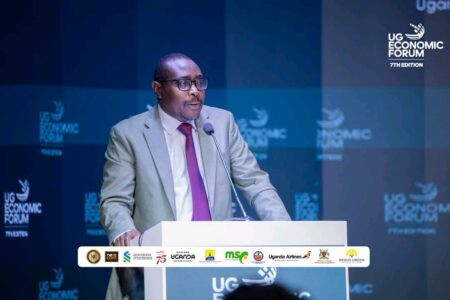



Victoria University Vice Chancellor Dr. Lawrence Muganga has accused Deputy Speaker Thomas Tayebwa of orchestrating his rejection during the ministerial vetting process, claiming that it was driven by personal animosity rather than merit or qualifications.
In a statement shared on social media platform X, Dr. Muganga dismissed allegations by Kasambya County MP Daudi Kabanda that he had been rejected due to holding multiple passports, including Ugandan, Canadian, and Rwandan. He categorically stated that he does not hold a Rwandan passport.
“This is a deliberate falsehood introduced by Hon. Thomas Tayebwa, and the truth must be told,” Dr. Muganga said, emphasizing that the accusations were baseless and meant to discredit him.
Dr. Muganga revealed that during the vetting process, Tayebwa allegedly told him, “In every vetting session we have to fail someone, and this time it had to be you.” According to Dr. Muganga, this statement clearly indicated that the rejection was predetermined and personal.
“It was never about passports, qualifications, or integrity. It was personal. It was calculated. It was discriminatory,” he said, further asserting that he possesses audio evidence that substantiates his claims, which he intends to release publicly.
Dr. Muganga argued that the vetting process was not conducted as parliamentary oversight but rather as a targeted attack fueled by prejudice. He described the behavior of Tayebwa as rooted in deep-seated hatred toward the Banyarwanda community in Uganda.

“Hon. Kabanda, what I experienced in that committee was not parliamentary oversight. It was hatred. It was discrimination. It was racism, directed at me simply because I am a Munyarwanda,” Dr. Muganga said.
The Vice Chancellor also highlighted the contributions of Banyarwanda citizens to Uganda, asserting that they are equal stakeholders in the country’s development. He pointed to his own decades of service as evidence.
“I personally have spent decades working tirelessly for Uganda, conducting thousands of interviews, engaging with thousands of people, sitting in hundreds of boardroom meetings across 56 countries. In all those years and in all those rooms, I have never once encountered the kind of hostility that Hon. Tayebwa directed at me,” Dr. Muganga said.
He noted that other members of the Appointments Committee, including opposition representatives, witnessed Tayebwa’s behavior and could corroborate the claim that the rejection was unjust and discriminatory.
“So I ask one simple question: what is Hon. Tayebwa so afraid of? What remains hidden that my presence at Internal Affairs would threaten to uncover?” Dr. Muganga asked, pointing to his professional expertise and knowledge as potential sources of concern for the Deputy Speaker.
Dr. Muganga also defended his loyalty to Uganda, stating that he had heeded President Museveni’s call to return from Canada and contribute to transforming Uganda’s education system, despite earning significantly more abroad.
“Uganda belongs to ALL its citizens equally. Banyarwanda included. We are not second-class citizens. We will not be treated as such,” he said, asserting that discriminatory practices should be publicly challenged and condemned.
He criticized the selective application of laws as a tool to marginalize specific communities, saying such behavior undermines national unity and equitable governance.

Dr. Muganga reiterated that his rejection was rooted in bias and not objective evaluation, and he urged the public to recognize the broader implications for governance, inclusivity, and minority rights in Uganda.
He condemned the use of false narratives and accusations to tarnish the reputation of professionals who have contributed to national development.
Dr. Muganga also emphasized his long-standing commitment to education and institutional reform, pointing out that his experience in both Uganda and internationally makes him uniquely positioned to contribute at the ministerial level.
The Vice Chancellor concluded that his treatment during the vetting process reflected broader societal prejudices, which must be challenged if Uganda is to uphold its principles of equality and fairness.
He warned that silencing capable individuals based on ethnicity or perceived personal threats undermines the country’s democratic institutions and governance structures.
Dr. Muganga reaffirmed his determination to continue serving Uganda and to fight for the rights of marginalized communities, vowing not to be intimidated or silenced by discriminatory practices.
“This is about fairness, transparency, and equality. We are Ugandan. We belong here. And we will not be silenced,” he said, concluding his statement with a call for justice and respect for all citizens regardless of ethnic background.