




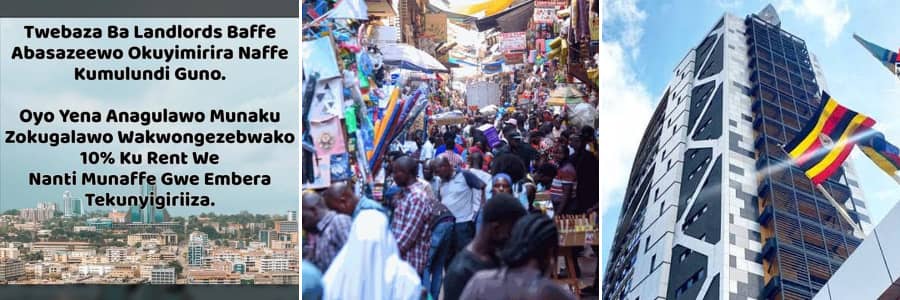
Kampala’s business community is facing fresh controversy ahead of the planned November 17 protest against the Uganda Revenue Authority (URA), after reports emerged that traders who refuse to close their shops could have their rent increased by 10 per cent. The alleged threats have triggered questions about the methods being used to mobilise business owners and whether traders are being given the freedom to decide whether to participate in the demonstration.
The planned protest, organised under the leadership of KACITA Uganda, is aimed at drawing attention to complaints about URA’s tax administration, EFRIS implementation, customs valuation and other business-related challenges. Organisers want traders to suspend operations as a way of demonstrating their dissatisfaction with the current business environment. However, the reported threats against those who remain open have introduced another dispute into an already sensitive mobilisation exercise.
A message circulating among traders reportedly warns that business owners who open their shops during the planned shutdown will face an additional 10 per cent in rent. The communication also appreciates landlords who have allegedly agreed to support the closure. This has left some traders concerned that a demonstration intended to address their financial difficulties could expose them to further expenses and disagreements with property owners.
For small business owners, closing shops even for one day can have serious consequences. Many rely on daily income to pay workers, settle rent, provide for their families and restock their businesses. Traders questioning the reported arrangement argue that supporting a demonstration should be a personal decision rather than something enforced through financial penalties or pressure from landlords.
The campaign for the shutdown has also been visible at Pentagon City, where a woman has reportedly been distributing flyers encouraging traders to close their businesses on November 17. However, the reported rent increase has become a major talking point, with business owners questioning whether those who disagree with the shutdown will be allowed to operate without facing intimidation or additional charges.
Beyond the rent controversy, divisions are also emerging among leaders representing traders in different parts of the country. Simon Sezi Mwijuka, Chairman of MBACITA, a KACITA branch operating in Western Uganda, has reportedly expressed concern that he was not consulted before the demonstration was organised. His position has brought attention to complaints that some leaders within the traders’ association structures were excluded from the planning process.
The National Entrepreneurs and Traders Association (NETA Uganda) has also distanced itself from the organisation of the demonstration, despite acknowledging the challenges facing traders. In a statement dated November 14, 2026, the association said it had not been consulted or formally invited to participate in planning the protest. It further clarified that it had not made an institutional decision to mobilise its members for the shutdown, instead calling for dialogue involving government, URA and different business associations.
With the demonstration approaching, attention is increasingly turning to the relationship between traders’ rights, association leadership and the freedom to make individual business decisions. Although traders have legitimate reasons to raise concerns about taxation and the cost of doing business, the reported threats of a 10 per cent rent increase have created another challenge. Many now want to know whether they can keep their businesses open on November 17 without being subjected to additional financial demands.