




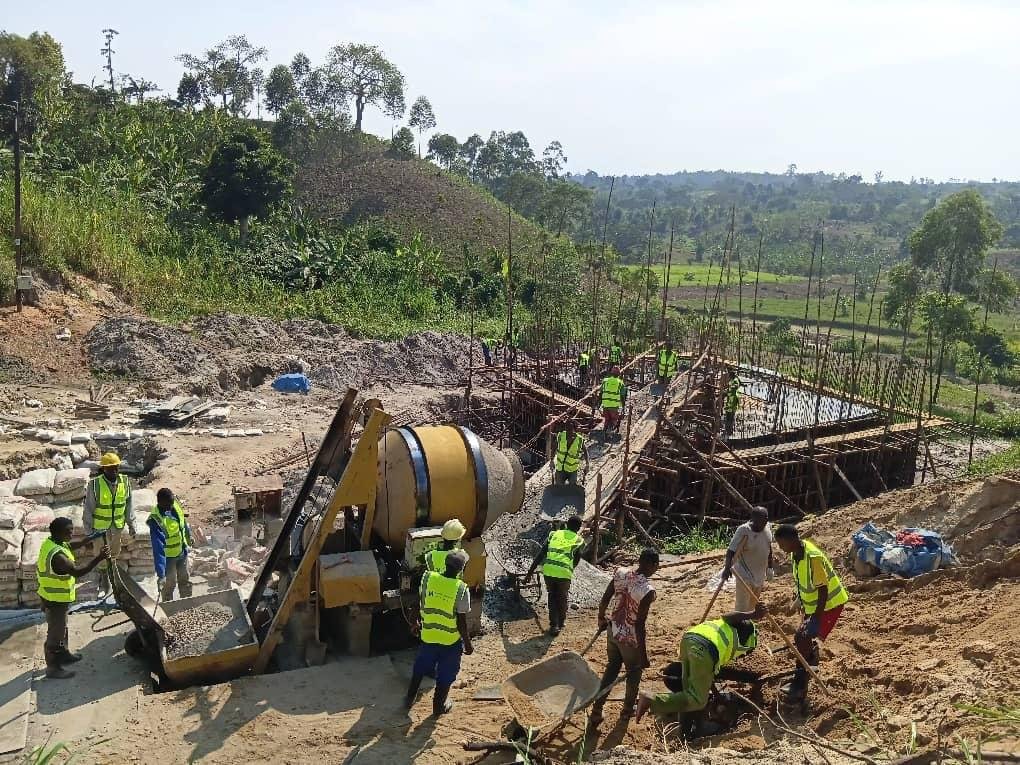
The Government’s efforts to improve access to safe and reliable water in Kanungu District are gaining momentum, with the Kanungu Water Supply Improvement Project now registering 33% overall progress.
Being implemented by the National Water and Sewerage Corporation (NWSC), the project is expected to boost safe water production by at least 2 million litres per day while improving transmission, storage and distribution systems serving Kihihi and neighbouring communities.
The project commenced on February 27, 2026, and is scheduled to take 18 months to complete, followed by a 12-month defects liability period. Its implementation covers a number of water infrastructure developments intended to address existing supply challenges and meet future demand.
One of the key interventions is the Matanda–Kihihi system, where a new spring source with a minimum production capacity of 1 million litres per day is being developed. The component also includes a pump station, about 13.3 kilometres of pumping main and a 200,000-litre elevated reservoir.
The Mpangango/Katete–Kihihi system is also receiving major upgrades, with its source capacity being increased from 1 million to 2 million litres per day. The works include a pump station, approximately 5.5 kilometres of pumping main and 12.6 kilometres of gravity main, while the Kihanda section will receive about 7.2 kilometres of gravity pipeline.
Progress on the ground has been driven largely by pipeline installation, which currently stands at 50%. Contractors have laid approximately 25 kilometres of the planned 40 kilometres of pipes, while the break pressure tank along the Katete–Kihihi line has already been completed.
At the Matanda spring source, concrete works are ongoing, while power extensions to both Matanda and Mpangango spring sources have been completed. The contractor has also been directed to commence and accelerate works at the Mpangango source as implementation continues.
The expanded water system is expected to improve the availability of clean and dependable water for households, schools, health facilities, businesses and tourism establishments. The project is also expected to reduce reliance on unsafe water sources, promote better hygiene and public health, and support economic activity and household welfare in Kanungu District.




