


The Government has ruled out the possibility of introducing supplementary national examinations for learners who miss Uganda’s national examinations, insisting that the current law governing the Uganda National Examinations Board (UNEB) does not provide for such an arrangement.
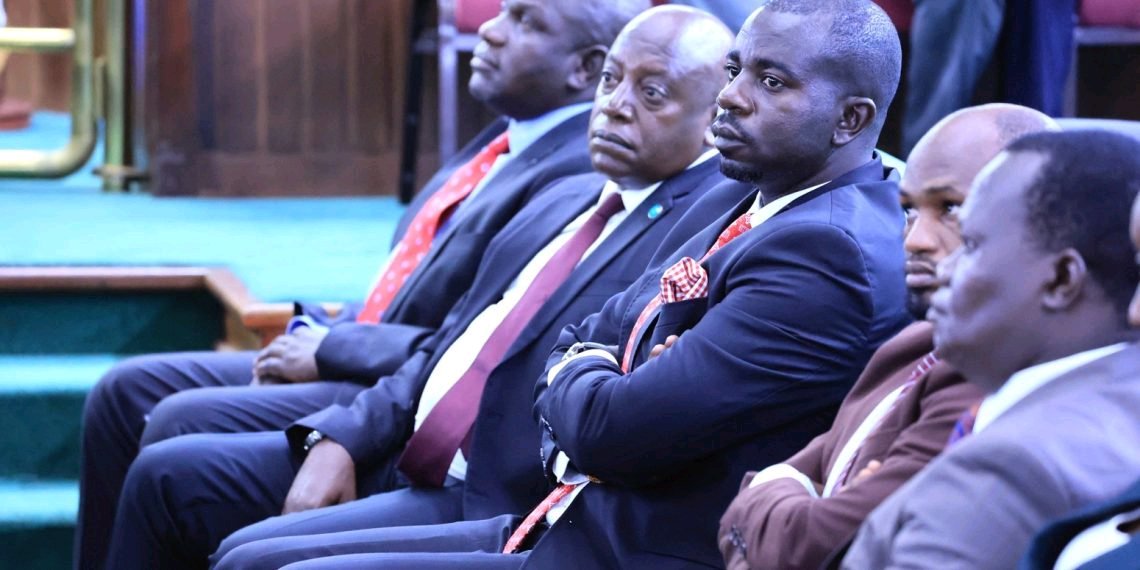
The position was communicated by the Minister of State for Education and Sports (Primary), Phyllis Chemutai, while responding to concerns raised by Members of Parliament during a plenary sitting on Tuesday, November 3, 2026. The matter had been brought before Parliament by Andrew Kiiza, the National Unity Platform (NUP) MP for Kigulu County South, who called for special consideration of learners unable to sit their examinations due to unavoidable circumstances.
Kiiza expressed concern over the number of registered candidates who fail to sit national examinations every year, warning that many end up losing an entire academic year despite having prepared and registered. He cited UNEB’s 2025 report, which indicated that approximately 14,000 learners did not sit their national examinations, saying the situation forces some students to abandon their education altogether.
The legislator argued that learners who miss examinations because of circumstances beyond their control should not be left without an opportunity to complete the examination process. He raised the concern at a time when UNEB is administering the 2026 national examinations, including the Primary Leaving Examinations (PLE), Uganda Certificate of Education (UCE) and Uganda Advanced Certificate of Education (UACE).
However, Chemutai maintained that introducing supplementary examinations would create serious administrative and financial challenges for UNEB. She explained that the examination body had advised against the proposal because organising another examination cycle would require extensive preparation, resources and additional time, similar to what is needed to conduct the regular national examinations.
The minister further warned that allowing supplementary examinations could open doors to abuse and manipulation of the national examination system. According to her, some candidates might deliberately postpone their examinations for reasons that do not qualify for exceptional consideration, potentially disrupting the examination calendar and undermining the orderly administration of national assessments.
Chemutai also pointed out that UNEB already operates under a tight examination schedule, making it difficult to introduce another examination cycle without affecting existing arrangements. She used the Uganda Certificate of Education examinations as an example, explaining that organising supplementary examinations would require a considerable period and additional resources. Speaker of Parliament Jacob Marksons Oboth expressed disappointment with the legal position, arguing that learners should not be punished for circumstances beyond their control. “Every law which has no exception is a sad one,” Oboth said, questioning why the law should not provide room for special cases.
Meanwhile, Deputy Attorney General Jackson Kafuuzi told Parliament that the existing legal framework could be amended to accommodate exceptional circumstances. He also noted that the financial challenges associated with supplementary examinations could be addressed through appropriate budgetary arrangements, leaving Parliament with the possibility of considering changes to the UNEB Act to protect learners who miss national examinations through no fault of their own.