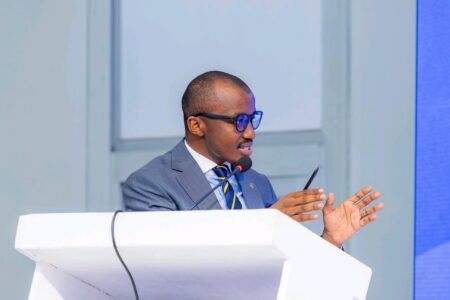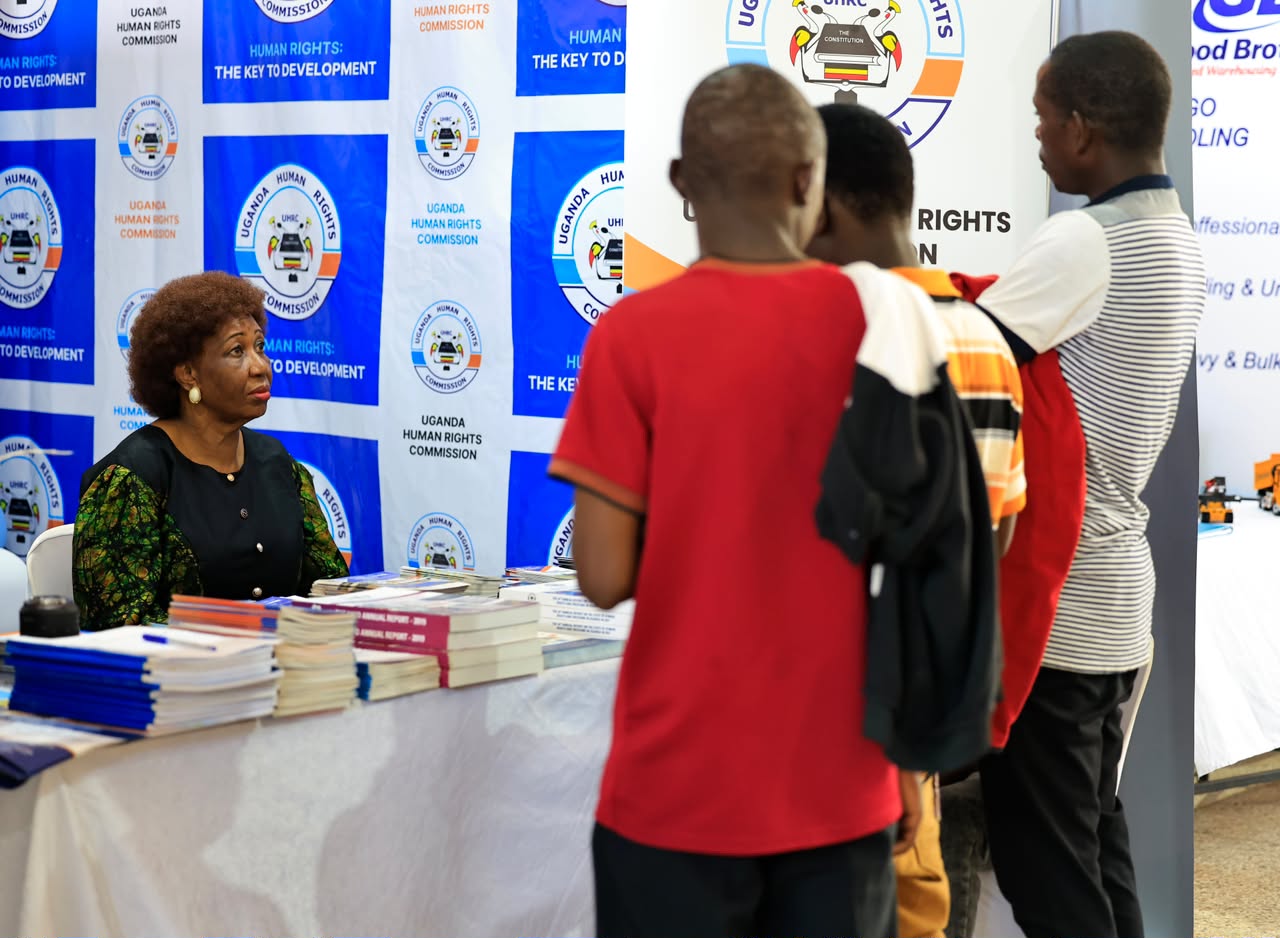
The Chairperson of the Uganda Human Rights Commission (UHRC), Hon. Mariam Wangadya, has taken human rights education directly to the public at the ongoing Uganda Manufacturers Association (UMA) exhibition in Lugogo, Kampala, encouraging Ugandans to understand their fundamental rights, speak out against violations and use the Commission’s channels to seek justice.
Wangadya spent Friday morning at the Commission’s exhibition stall, engaging visitors in discussions about human rights, answering questions and listening to concerns about the protection of fundamental freedoms in Uganda. She also distributed Information, Education and Communication (IEC) materials, alongside annual and special reports, to help members of the public gain a better understanding of the Commission’s work.
The UHRC established its stall at the exhibition on Friday, October 2, 2026, and has since been using the platform to showcase its services and educate the public about its mandate. The initiative is part of the Commission’s efforts to bring human rights information closer to ordinary Ugandans and ensure that citizens know where to turn when their rights are violated.
Unlike formal engagements that may limit public participation, Wangadya’s presence at the stall created an opportunity for visitors to interact directly with the head of the institution, seek clarification on human rights matters and share their opinions about the Commission’s performance.
Reflecting on the engagement, Wangadya said she was encouraged by the enthusiasm demonstrated by members of the public, noting that the interaction allowed the Commission to answer questions while also receiving valuable feedback from the people it serves.
“I have seen for myself the enthusiasm of the general public. They have questions; I have given them answers and, at the same time, we have received feedback from them on how they view our performance,” she said.
One of the key issues raised during the discussions was the need to strengthen human rights education in schools, other learning institutions and communities. Some visitors wanted to understand how they could initiate human rights awareness activities in their respective institutions and villages, demonstrating the growing importance of community-led efforts in promoting respect for fundamental rights and freedoms.
The rights of the boy child also emerged as an issue of public interest, with visitors seeking greater attention to concerns affecting boys. The discussions provided an opportunity for the Commission to emphasise the importance of protecting every child and ensuring that human rights concerns affecting different groups are recognised and addressed without discrimination.
Another major issue concerned the right to a fair hearing and the principle that every person is presumed innocent until proven guilty in accordance with the law. Visitors raised concerns about the ongoing anti-corruption operations involving the Minister of Local Government, Hon. Balam Barugahara, questioning how the rights of individuals under investigation should be protected during such processes.
In response, Wangadya said the minister had good intentions but stressed that the rights and freedoms of suspects must be respected. Her remarks highlighted the importance of ensuring that the fight against corruption proceeds within the law, with all individuals entitled to due process and protection of their fundamental rights regardless of the allegations they face.
The engagement also focused on practical ways through which citizens can access the Commission and report suspected human rights violations. Wangadya distributed stickers and keyholders bearing the UHRC’s toll-free telephone numbers, giving visitors a simple reminder of the channels available to them when seeking assistance.
The distribution of these materials was intended to make it easier for members of the public to remember and use the Commission’s contact details. It also reinforced the message that reporting human rights violations should not be limited to people who are familiar with government offices or formal complaint procedures.
Several visitors took the opportunity to appreciate Wangadya for her efforts in promoting and protecting human rights. Their responses gave the Commission direct insight into public expectations and the issues citizens believe deserve greater attention.
Beyond the discussions at the stall, Wangadya also used the exhibition to deliver the Commission’s Independence Day message, calling upon Ugandans to support the UHRC as it carries out its constitutional responsibilities. Her appeal emphasised the importance of cooperation between citizens and public institutions in building a country where human rights are respected, protected and upheld.
The annual UMA exhibition, which brings together businesses, public institutions and members of the public, provides participating organisations with an opportunity to showcase their work and connect with citizens. This year’s event is expected to run until Sunday, October 11, 2026.
For the UHRC, participation in the exhibition goes beyond displaying institutional services. It offers a platform to explain human rights in practical terms, address public misconceptions, receive feedback and encourage citizens to take an active role in protecting their rights and those of others.
As the exhibition draws closer to its conclusion, the Commission’s presence at Lugogo continues to demonstrate the value of taking human rights education beyond offices and conference rooms to places where ordinary people can freely ask questions, share experiences and obtain information.
Through Wangadya’s direct engagement, distribution of educational materials and encouragement for the public to report violations, the UHRC is seeking to strengthen awareness of human rights and remind Ugandans that understanding their rights is an important step towards protecting them.