
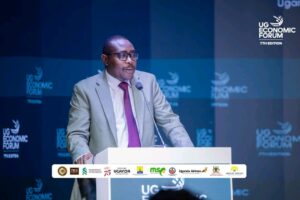



A strong and direct statement attributed to Muhoozi Kainerugaba has sparked widespread discussion about the ongoing conflict in the Middle East.
His remarks reflect growing global fatigue with the prolonged instability in the region. At the same time, they signal a firm stance on the issue of Israel’s security.
According to the statement, there is an urgent desire to see the war in the Middle East come to an end. This sentiment resonates with many around the world who have watched the conflict drag on with devastating consequences. Civilian suffering, economic disruption, and geopolitical tensions have all contributed to this sense of exhaustion.
The Middle East has long been a focal point of global conflict, involving multiple actors and deep-rooted historical tensions. Calls for peace are not new, but they have gained renewed urgency as violence continues. Many leaders and observers are now emphasizing the need for a sustainable resolution.
However, the statement introduces a clear warning regarding any attempts to destroy or defeat Israel.
It underscores that such actions would not be tolerated and could trigger broader international involvement. This adds a significant layer of complexity to the situation.

The assertion that “we will be drawn into the war” suggests a willingness to intervene if certain red lines are crossed. This reflects a broader pattern in international relations, where alliances and strategic interests often dictate responses. It also raises questions about how far such commitments might extend.
Support for Israel in this context is presented as unequivocal. The statement makes it clear that any escalation aimed at undermining Israel’s existence would provoke a strong reaction. This aligns with the positions held by several nations that view Israel’s security as non-negotiable.
At the same time, the desire to end the war highlights a tension between peace advocacy and strategic commitments. On one hand, there is a clear call for de-escalation. On the other, there is a readiness to engage if certain conditions arise.
This dual message reflects the broader dilemma faced by many global actors. Balancing the pursuit of peace with the defense of allies is a recurring challenge in international politics. It often leads to complex and sometimes contradictory policy positions.
The statement also speaks to the emotional and psychological toll of prolonged conflict. The phrase “the world is tired” captures a widespread भावना that transcends borders. People across different regions are increasingly calling for an end to violence.
In addition, the remarks may be interpreted as a deterrent. By clearly outlining the consequences of targeting Israel, the statement aims to discourage further escalation. Such messaging is often used to prevent conflicts from widening.
The geopolitical implications of this stance are significant. Any additional involvement by external actors could transform a regional conflict into a much larger confrontation. This is a scenario that many policymakers are keen to avoid.
Observers have noted that statements like these can influence both allies and adversaries. They send signals about potential responses and help shape expectations. In this case, the message is both a warning and a declaration of alignment.
It is also important to consider how such statements are received domestically and internationally. Supporters may view them as a strong and principled موقف. Critics, however, might argue that they risk further escalation.

The broader international community continues to call for diplomatic solutions. Negotiations, ceasefires, and humanitarian efforts remain central to these efforts. Yet progress has often been slow and fragile.
In this context, the role of influential voices becomes even more important. Statements from military and political leaders can either ease tensions or heighten them. Their impact depends largely on how they are interpreted and acted upon.
The reference to intervention also raises questions about military readiness and strategic planning. Engaging in a conflict of this scale would require significant resources and coordination. It is not a decision taken lightly.
At the same time, the emphasis on Israel’s defense reflects longstanding alliances and shared interests. These relationships are shaped by history, politics, and security considerations. They play a crucial role in shaping responses to conflict.
As the situation evolves, the balance between rhetoric and action will be closely watched. Statements alone do not determine outcomes, but they can set the tone for future developments. This makes them an important part of the broader narrative.
Public opinion will also play a role in shaping how such positions are sustained. As people continue to demand peace, leaders may face pressure to prioritize diplomatic solutions. This dynamic adds another layer to the situation.
Ultimately, the statement highlights the complexity of the Middle East conflict and the challenges of resolving it. It underscores the urgent need for peace while acknowledging the realities of global alliances. The path forward remains uncertain, but the stakes are undeniably high.




